
Our Vision
Menands is a school of choice where every student is known, challenged, and prepared to thrive academically, socially, and personally, in a diverse and connected community.
Our Mission
In partnership with families and the community, Menands provides a rigorous, inclusive, and engaging PreK–8 educational experience that cultivates curiosity, belonging, and lifelong learning.
- A Letter From The Superintendent
- Executive Summary
- Priority #1: Academic excellence and future-ready learning
- Priority #2: Student Experience, Engagement and Well-Being
- Priority #3: Culture, Belonging and Inclusive Practices
- Priority #4: Family and Community Partnerships
- Priority #5: Organizational Effectiveness and Sustainability
A Letter From The Superintendent
Dear Menands Community,
Over the past year, the Menands Union Free School District engaged in a thoughtful and collaborative process to develop a new five-year Strategic Plan that will guide our work from 2026 through 2031. As we prepare to launch this plan, we would like to thank the many students, staff members, families, administrators, Board of Education members, and community partners who shared their time, experiences, and perspectives throughout this important work.
To support this process, the district partnered with Capital Region BOCES Engagement & Development Services to facilitate stakeholder engagement, strategic planning discussions, and the development of a framework that reflects our community’s aspirations for the future. Throughout the 2025-26 school year, BOCES representatives met with a variety of stakeholder groups, including students, teachers, support staff, administration, and the Board of Education. Together, they explored key questions about learning, school culture, student experiences, community partnerships, organizational effectiveness, and what success should look like for Menands in the years ahead.
This work also built upon the district’s partnership with Tangible Development, whose culture and belonging assessment provided valuable insight into how students, families and staff experience inclusion and connection within our school community. Findings from that work helped identify both areas of progress and opportunities for continued growth, ensuring that the strategic plan reflects our commitment to fostering a welcoming environment where everyone feels valued and supported.
The feedback gathered throughout the planning process revealed a desire to strengthen academic opportunities and future-ready learning, expand student voice and engagement, deepen family and community partnerships, continue advancing a culture of belonging, and ensure that district systems remain sustainable and effective. These themes are the foundation for the strategic framework’s five focus areas:
- Academic Excellence and Future-Ready Learning
- Student Experience, Engagement and Well-Being
- Culture, Belonging, and Inclusive Practices
- Family and Community Partnership
- Organizational Effectiveness and Sustainability
Our strategic plan is designed to honor what makes Menands special while positioning the district for future success. It reflects our commitment to providing high-quality educational experiences, supporting the whole child, strengthening relationships with families and community members, and ensuring continuous improvement across all aspects of district operations. The plan also includes measurable goals and action steps that will allow the district to monitor progress and maintain accountability over the next five years.
Throughout this process, one message was heard repeatedly: The strength of Menands lies in its close-knit community and its shared commitment to students. The ideas, concerns, and aspirations contributed by stakeholders have shaped this plan and will continue to inform its implementation.
On behalf of the district, thank you to everyone who participated in focus groups, planning sessions, discussions, and other engagement opportunities. Your voices have helped create a roadmap that reflects our collective vision for the future of Menands.
As we begin implementation in the 2026-27 school year, we look forward to continuing this partnership with our community and sharing regular updates on our progress. Together, we will ensure that every student is known, challenged, supported, and prepared to thrive.
Sincerely,
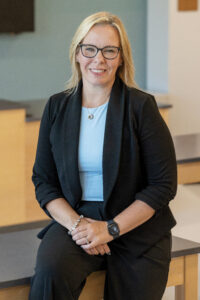
Jennifer Cannavo
Superintendent of Schools
Menands Union Free School District
Executive Summary
A school of choice in the Capital Region
The Menands School District Strategic Plan establishes a comprehensive roadmap for the next five years, focused on ensuring student success, strengthening community partnerships, and sustaining a highperforming, inclusive school environment. Grounded in the district’s commitment to academic excellence and personalized learning, the plan reflects input from stakeholders and outlines actionable strategies, measurable outcomes, and a shared vision for the future.
Academic Excellence and Future-Ready Learning
The district will prioritize high-quality instruction that prepares students for success in high school, college, careers, and civic life. Central to this work is the development of a Menands Portrait of a Graduate, which will define the skills, attributes, and experiences students should possess upon completion of their education in Menands. The district will continue to expand access to accelerated coursework, strengthen curriculum alignment, improve instructional technology, and integrate real-world and financial literacy experiences into student learning. Progress will be measured through academic achievement, growth data, student engagement indicators, participation in advanced coursework, and feedback from receiving high schools.
Student Experience, Engagement and Well-Being
Menands seeks to foster an environment where every student feels safe, supported, respected, and connected. Strategic priorities include expanding extracurricular and athletic opportunities, increasing student voice in school decision-making, refining restorative discipline practices, improving outdoor and recreational spaces, strengthening implementation of Responsive Classroom practices, and enhancing counseling and social-emotional supports. Success will be measured through improvements in attendance, student engagement, behavior data, extracurricular participation, and student perceptions of safety and belonging.
Culture, Belonging, and Inclusive Practices
Recognizing diversity as a strength, the district is committed to ensuring belonging is a lived experience for all students, staff and families. The plan emphasizes reviewing systems through an equity lens, strengthening culturally responsive practices, supporting inclusive recruitment and retention efforts, measuring school climate and belonging, and formalizing organizational commitments to trust, inclusion, and collaboration. Ongoing evaluation through surveys, participation data, and stakeholder feedback will guide continuous improvement efforts.
Family and Community Partnerships
The district aims to build authentic, reciprocal relationships with families and the broader Menands community. Key initiatives include improving communication practices, expanding outreach to diverse stakeholder groups, developing stronger community partnerships, creating advisory structures for engagement, and sharing the district’s story through transparent and consistent communication. Measures of success include increased family participation, improved perceptions of trust and communication, stronger community partnerships, and greater engagement across district communication platforms.
Organizational Effectiveness and Sustainability
To ensure long-term success, Menands will align resources and decision-making with strategic priorities while cultivating a culture of continuous improvement. The district will focus on strengthening leadership opportunities for staff, refining current initiatives, supporting employee wellness, improving internal systems and communication, and establishing clear monitoring and reporting structures. Annual progress updates and transparent reporting will help ensure accountability and sustained momentum toward strategic goals.
PRIORITY #1: ACADEMIC EXCELLENCE AND FUTURE-READY LEARNING

Throughout the engagement process, participants highlighted a desire to expand opportunities and better prepare students for future success. Students expressed interest in additional academic and extracurricular choices, while administrators emphasized exploring more academic offerings modeled after successful programs, such as accelerated Spanish. Sentiments about the consistency and effectiveness of Chromebook use and online learning tools were also captured across stakeholder groups. Teachers emphasized the importance of developing broader measures of student success beyond state assessments, tracking student outcomes after graduation from Menands to inform continuous improvement, and strengthening alignment in scheduling, school-day structures, and transitions between key grade levels. These themes directly informed the district’s strategies.
STRATEGY 1
Accelerate academic growth and achievement across all student groups
Action Steps
- Strengthening instructional coherence and alignment with receiving high schools
- Continue Grading for Opportunity work, starting with alignment of standards-based assessments with the Portrait of a Graduate
- Develop the Menands’ Portrait of a Graduate aligning courses, activities and educational experiences to the framework
- Develop shared expectations for instructional rigor and high-quality student work across grade levels
-
Develop a communications plan, including a visually appealing graphic, to support and promote the Menands Portrait of a Graduate
- Protect and scale the current collaborative curriculum model, identifying which areas and when, to ensure meaningful teacher voice in curriculum development, instructional decision-making and refinement cycles
- Build a curriculum refinement cycle in year 1 and timeline for implementation
- Adopt → implement → reflect → adjust
STRATEGY 2
Strengthen instructional coherence and alignment with receiving high schools
Action Steps
- Invest in summer and cross-grade articulation time, especially PreK–2 and 5–6 transitions
- Create a PreK–8 Vertical Integration Plan:
- Buddy systems (PreK–2, 5–6)
- Shared professional learning
- Formalize transition curriculum alignment and practices with written expectations, shared data, and relationship-building with partner high schools
- Include grade 9 integration with subject area teachers at choice high schools
STRATEGY 3
Explore student choice and electives
Action Steps
- Ensure high rates of participation in accelerated math, science and Spanish continues, with ⅔ of all middle school students enrolled in at least one accelerated course
- Formalize open-access accelerated learning opportunities so any student who wishes to pursue advanced coursework has pathways and support to do so
- Explore expanded accelerated and enrichment opportunities in art, music and other special-area subjects
STRATEGY 4
Improve usability, consistency and sustainability of instructional technology
Action Steps
- Encourage responsible and innovative use of AI tools by both students and staff, as appropriate by role
- Create and implement an instructional technology plan
- Continue to focus on online safety and appropriate use of technology
STRATEGY 5
Integrate real-world and financial literacy experiences
Action Steps
- Develop and implement programming that includes guest speakers to improve real-world and financial literacy knowledge
MEASURES OF PROGRESS FOR PRIORITY #1
-
Increased proficiency rates across all student subgroups
Measured annually for the next 5 years
-
Growth measures in ELA and math
Measured annually for the next 5 years
-
Participation rates in accelerated coursework
Measured annually for the next 5 years
-
Student engagement and belonging survey results
Establish a baseline measure in Year 1; measure annually thereafter
-
Receiving high school feedback and student performance data
Measured annually for the next 5 years
Priority #2: Student Experience, Engagement and Well-Being
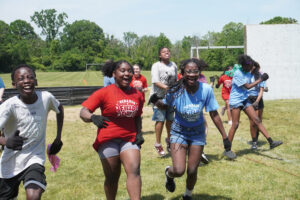
Foster a school environment where students feel safe,
respected, supported, and excited to learn.
Stakeholder feedback underscored the importance of strengthening student support systems and expanding opportunities that contribute to a positive school experience. Some noted the increasing complexity of student needs and significant demands for supporting specific populations of learners. Students expressed a strong desire for more clubs, activities, athletic opportunities, and school pride. Participants across stakeholder groups also pointed to the need for age-appropriate playgrounds, improved athletic and recreational spaces, and the continuation of an established schedule of facility improvements.
STRATEGY 1
Expand extracurricular opportunities
Action Steps
- Identify field trips for experiential learning connected to Portrait of a Graduate
- Explore opportunities for clubs and organizations affiliated with Local Education Agencies (LEAs)
- Parents, community members and teacher interest in ASEP: After School Educational Programming for elementary students.
- Help support the connection to travel sports in neighboring communities
- Elevate the district’s sports programs to reflect the role of athletics in students’ lives, and explore agreements for extracurriculars with neighboring school districts
- Create a community page on the Menands website to serve as a resource identifying available spaces, activities
STRATEGY 2
Increase student voice
Action Steps
- Formalize student council’s role as a leadership growth and development opportunity by developing an annual plan for decision-making input on school operations for students and separating student council positions from class advisor positions in the middle school
- Develop and implement norms and expectations for middle school students that promote increased independence, executive functioning and age appropriate skills
- As an example, add locker clean-out days for middle school students
- Establish three opportunities for student-led presentations to the board of education each year
STRATEGY 3
Refine discipline and restorative
practices
Action Steps
- Develop a clear, schoolwide behavior framework that answers how restorative practices and accountability work together
STRATEGY 4
Improve outdoor spaces
Action Steps
- Explore playground improvements, athletic fields and functional design
STRATEGY 5
Continue implementing Responsive Classroom practices
Action Steps
- Move beyond morning meeting and class rules practices to ensure all teachers integrate the Responsive Classroom model, including academic choice, teacher language and logical consequences
- Ensure the model aligns academic instruction, behavior expectations, student relationships and social-emotional learning practices
- Provide explicit and ongoing training to capture new staff and ensure consistent updates to training schedules
STRATEGY 6
Strengthen proactive social-emotional and counseling supports
Action Steps
- Revisit and update the school counseling plan to reflect the outcomes of using the social-emotional screener, with input from and alignment with high school counselors at receiving school districts, to create more proactive intervention and support for students
- Reimagine school counseling space to meet students’ needs around privacy and groups
MEASURES OF PROGRESS FOR PRIORITY #2
-
Improved student attendance rates and reductions in chronic absenteeism
Measured annually
- Reduction in behavioral referrals
Measured annually
-
Consistent implementation of restorative practices across grade levels
Establish a baseline measure in Year 1; measure annually thereafter
-
Consistent growth and feedback of Responsive Classroom practices. Development of a way to measure consistency and effectiveness, and identify areas where faculty and staff need additional support.
Measure determined in Year 1
Implementation in Year 2
Refined in years 3, 4, 5
-
Student survey data reflecting improved feelings of safety, belonging, support and engagement
Establish a baseline measure in Year 1; measure annually thereafter -
Increased participation in extracurricular activities
Measured annually - Completion and implementation of counseling and social-emotional support plans
Completed in Year 1
Implementation in Year 2
Refined in years 3, 4, 5
- Increased opportunities for student voice and participation in activities and events
Report annually on participation, initiatives, and student feedback
- Improvements to counseling and student support spaces
Report annually on project milestones, utilization, and stakeholder feedback
PRIORITY #3: CULTURE, BELONGING AND INCLUSIVE PRACTICES
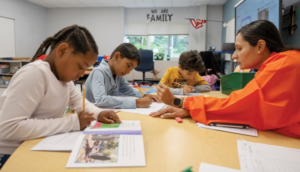 Move from diversity as a demographic reality to belonging as a lived experience.
During focus groups, participants highlighted both the strengths and challenges of building meaningful family and community partnerships in Menands. Members of the school community acknowledged that the district’s increasingly diverse population brings varied cultural norms, communication preferences, and life experiences that can create barriers to participation, attendance, and access to school programs and events. Administrators expressed a desire to establish a diverse family engagement committee to strengthen relationships with caregivers and ensure a broader range of perspectives informs district decision-making, in addition to staff emphasizing the importance of building trust with families. At the same time, stakeholders identified strong communication practices, positive media relations, and the contributions of key community partners—including the School Resource Officer—as important district strengths.
These findings were further supported by the 2025 Diversity, Equity, and Inclusion Organizational Assessment conducted by Tangible Development, which examined district climate, inclusivity, and barriers to belonging. Recommendations from that assessment, focused on fostering a culture where all students, staff, and families feel valued, included, and connected, are incorporated throughout this priority area of the strategic plan.
STRATEGY 1
Continuously examine systems through an equity lens
Action Steps
- Reconfirm leaders of the DEI efforts and relevant responsibilities across all staff and caregiver organizations
- Conduct a districtwide capacity vs. demand study
- Develop a process for teaming with staff to review caseloads and make informed decisions to align staffing needs with assessments and enrollment in:
- ENL, special education and PreK
STRATEGY 2
Strengthen culturally responsive instructional practices
Action Steps
- Enhance required and optional training with DEI curriculum that includes learning and development sessions for all employees on topics that target least included populations on Menands’ Tolerance Thermometer
STRATEGY 3
Incorporate culturally responsive practices into recruitment and retention
Action Steps
- Continue to review and update recruitment and hiring practices to ensure inclusivity of a diverse workforce
- Continue to recruit a full-time building substitute with an approach through the lens of new teacher preparation and career exploration
- Continue to support contingency plans and rotating building substitutes for staff absences to minimize disruption of services
STRATEGY 4
Continue measuring belonging and climate, incorporating feedback into practice
Action Steps
- Explore ways to encourage and engage employee feedback, and create expectations or accountability measures around acknowledgment and follow-through
- Create affinity/identity-based groups for students and staff, and parents and caregivers
STRATEGY 5
Formalize cultural commitments to survive leadership and staffing changes
Action Steps
- Update registration and hiring forms to be more inclusive for transgender and nonbinary students, family members and staff
- Provide more expansive language options
- Continue to expand our definition of diversity in an intersectional way
- Develop an awareness and learning campaign that elevates diversity within the school and frames organizational DEI values and goes through an intersectional and hyperlocal lens
MEASURES OF PROGRESS FOR PRIORITY #3
-
Improved climate, belonging and inclusion survey results among students, staff and families
Baseline established in Year 1; measured annually or biennially thereafter
-
Increased participation in culturally-responsive learning opportunities and events
Measured annually and parallel to family and community partnerships goal
-
Increased staff participation in affinity groups and collaborative structures; increased employee feedback opportunities
Groups created in Year 1, participation measured annually
Employee feedback plan created in Year 1, survey participation and results measured annually beginning in Year 2
-
Increased awareness and visibility of inclusive practices throughout the district
Annual review using communication metrics, observations and stakeholder feedback
-
Evidence of stronger collaboration and integration across departments, grade levels and programs
Annual reporting on collaborative initiatives, interdisciplinary projects, and staff feedback
PRIORITY #4: FAMILY AND COMMUNITY PARTNERSHIPS
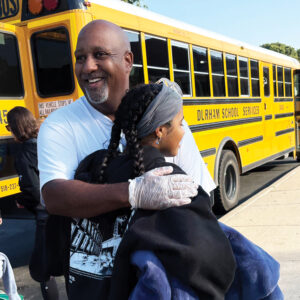 Build authentic, reciprocal partnerships with families and the broader Menands community.
Reflecting on current family and community partnerships, stakeholder conversations revealed opportunities to strengthen family and community engagement by building trust, improving access, and creating more inclusive avenues for participation. The board members identified diverse cultural norms and demographic factors were identified as potential barriers to attendance and involvement in school activities, highlighting the need for outreach strategies that are responsive to the needs of all families. School employees emphasized the value of establishing a diverse family engagement committee to strengthen communication and ensure a broader range of caregiver perspectives are represented. At the same time, stakeholders pointed to several strengths, including effective communication practices, positive media relations that enhance district visibility, and the strong community connections fostered by key leaders in the school population. These findings informed strategies focused on strengthening relationships, expanding engagement, and creating more authentic partnerships between the district, families, and the broader Menands community.
STRATEGY 1
Redefine engagement with students and families
Action Step
- Evaluate current engagement activities to identify needs, gaps, saturation and unintended judgement (access to resources, stability)
- Develop and train staff on communication norms (e.g., when to use ParentSquare or when to make a phone call)
- Seek to understand how each family prefers to communicate and any barriers (e.g., language, technology) that may exist
- Promote the use of consultative communication to support staff in communicating in ways to build trust and open doors
- Support staff in building proactive, relationship-centered communication practices that strengthen trust and partnership with families
- Train staff and families in ParentSquare features and functions
STRATEGY 2
Expand community-based outreach
Action Step
- Build relationships with key stakeholders in various caregiver populations to improve communication
- Identify new opportunities for community partnerships related to:
- Academics, experiential learning
- Family and community needs
STRATEGY 3
Establish a diverse community engagement advisory group
Action Step
- Develop an annual calendar of events with descriptions for each
STRATEGY 4
Continue to strengthen district identity through transparency and storytelling
Action Step
- Align communication practices to appropriate channels
- Engage in two-way communication on social media
- Clear, transparent and informative communication via ParentSquare
- Update resources and relevant information on the website
- Highlight classroom experiences, student growth and school culture through regular storytelling and two-way communication
- Identify 2-3 teachers who use ParentSquare regularly to “show” classroom and school happenings
- Teacher-led PD on ParentSquare to increase overall engagement
- Promote examples of strengthening school-to-home connections through platform sharing and communication
MEASURES OF PROGRESS FOR PRIORITY #4
-
Increased family participation in school events and engagement opportunities
Measured annually
-
Improved family survey responses related to communication, trust, engagement and connection to the district
Measured annually
-
Increased strategic use of district communication platforms (e.g., ParentSquare, website, social media)
Measured annually using platform analytics, staff usage, and engagement metrics
-
Growth in community partnerships that support academics, student experiences and family support services
Report annually on new and sustained partnerships and their impact
-
Positive community perception of the district’s identity, culture and educational experience
Measured through community survey results and stakeholder feedback every 2-3 years
PRIORITY #5: ORGANIZATIONAL EFFECTIVENESS AND SUSTAINABILITY
 Ensure the culture of continuous improvement is actionable, measurable and sustainable.
To sustain the culture of continuous improvement, participants emphasized the importance of organizational clarity, consistency, and communication to support long-term district effectiveness. School leadership was in agreement to continue their steady, intentional efforts to ensure decision-making processes receive significant attention before implementation. They expressed interest in developing structures to respond more efficiently to emerging needs and challenges. Teachers identified a need for clearer expectations, documentation, and training around key procedures and systems, particularly for new staff navigating processes such as assessments and instructional support practices that may evolve from year to year.
Feedback also emphasized the importance of transparent communication regarding district priorities. A review of budget communication materials generated recommendations for improving clarity and accessibility. Together, these findings informed strategies focused on strengthening communication, improving operational consistency, increasing staff engagement in district priorities, creating sustainable systems and resources, and establishing clear processes for monitoring and reporting progress toward strategic goals.
STRATEGY 1
Continue to align the school district budget to priorities
Action Step
- Develop a clear, consistent plan for communicating daily coverage needs, balancing responsibilities among available staff
- Ensure every Menands resident receives a physical copy of the five-year strategic plan
- Deliver an annual update on strategic plan progress to various stakeholder groups, not just the board of education
STRATEGY 2
Identify and provide staff with leadership opportunities
Action Step
- Conduct stay interviews with experienced staff to proactively retain them
- Continue short-term focused committees to guide work, decision-making and progress
- Develop norms for attendance, meetings and time commitments for participating on committees
STRATEGY 3
Refine and strengthen current initiatives, moving them into sustained practices
Action Step
- Align administrators and teachers, across teams, on shared language and expectations, especially for behavior to improve ownership and conversation
STRATEGY 4
Strategically introduce new initiatives to respond to identified needs
Action Step
- Embed adult wellness and collegial joy into the calendar
STRATEGY 5
Progress monitoring and reporting
Action Step
- Create a single, living “How We Do Things at Menands” hub:
- Referrals
- Instructional Support Team
- Behavior processes
- Assessment protocols
- Additional key resources for staff
- Referral with the feedback-closure norm, understanding of the Code of Conduct
- If a concern is referred, staff receive follow-up on:
- What happened
- What to do instructional‑ or behavior‑wise next.
- If a concern is referred, staff receive follow-up on:
MEASURES OF PROGRESS FOR PRIORITY #5
-
Improved staff understanding of district goals, priorities, communication and organizational effectiveness (measured through staff survey results)
Baseline established in Year 1; measured annually
-
Completion, implementation, and regular review of districtwide operational guides, protocols, and shared expectations
Initial development in Year 1; implementation beginning in Year 2, reviewed and updated annually
-
Annual monitoring and public reporting of Strategic Plan progress
Report annually to the Board of Education and community
-
Evidence of alignment between budget priorities, staffing decisions and Strategic Plan goals
Reviewed annually during the budget development process -
Increased participation in professional learning, collaboration, leadership development, and staff wellness opportunities
Measured annually through participation data and staff feedback -
Code of Conduct review and updates, evaluation on effectiveness
Review completed in Year 1 (or designated year); effectiveness evaluated and updated periodically -
Increased communication with the Menands community regarding Strategic Plan implementation and district progress
Annual communication plan implemented; progress shared through newsletters, website, annual report, and other district communications